miércoles, 18 de mayo de 2022

  PROBLEMAS 

5) Para una fiesta de Reyes, en un colegio se preparan 120 bolsitas con 125,45 gramos de peladillas, 42,18 gramos de chufas y 73,21 gramos de caramelos cada una. ¿Cuánto pesarán todas las bolsitas juntas? 

6) Federico ha ido al cine y ha contado 26 filas de 36 butacas cada una. Si cada entrada cuesta 4,21 €, ¿cuánto dinero recaudan cuando se llena la sala? 

 The Middle Ages

During the Middle Ages, different civilisations lived on the Iberian Peninsula. Visigoths settled after the Roman Empire fell. Then Muslims invaded, calling their new territories Al-Andalus.

Three religious groups lived together: Muslims, Jews and Christians. Over the next centuries, the Christians in the north fought against the Muslims. By the end of 1492, the whole Iberian Peninsula was under Christian rule again. 


martes, 17 de mayo de 2022

 PROBLEMAS 

3) Miriam quiere comprar un bono transporte. Uno de diez viajes le cuesta 60 € y uno de 16 viajes, 85,5 €. ¿Cuánto cuesta un viaje en cada caso? 

4) El ascensor admite hasta 150 kilos de peso. Vicente quiere subir una caja de herramientas que pesa 6,7 kg, una bolsa con cemento de 23,6 kg, y una caja con ladrillos de 55,9 kg. Si Vicente pesa 89,5 kg, ¿qué debe hacer para subir toda la carga en sólo dos viajes?


lunes, 16 de mayo de 2022

 PROBLEMAS 

1) Tres amigos han comprado a partes iguales un aparato de música que ha costado 89,55 €. ¿Cuánto dinero ha puesto cada uno? 

2) Un paquete de leche cuesta 0,59 €. ¿Cuánto pagaremos por dos docenas de paquetes?

viernes, 13 de mayo de 2022

 PROBLEMAS  

9)Una barra de pan cuesta 0,38 €. Elvira ha encargado a su hijo que compre 5 barras y le ha dado sólo una moneda para que pague. ¿Qué moneda le habrá dado? 

10) Leticia va al aeropuerto con tres maletas. Su bolso pesa 3,74 kg, la mochila pesa 14,25 kg y la maleta grande pesa 29,82 kg. Si sólo puede llevar un total de 45 kg, ¿tendrá algún problema Leticia para embarcar? 


The biosphere (2)

4- Biodiversity loss : Extinction.

A species becomes ‘extinct’ when every single member of that species dies.


5- Causes of extinction. 

There are many natural causes of extinction, however humans are responsible for most of the recent loss of biodiversity in the world. 
Examples of destructive practices: climate change, hunting and capturing animals, alteration of habitats,  over-exploiting resources, pollution, releasing pets into the wild...

6- Effects of extinction.

Once a species is lost, it is no longer available to us as food, enjoyment,  as a resource for medicines and textiles among other things.

7-Protecting biodiversity

Endangered species are those which are in danger of extinction.

National parks and biosphere reserves are created to protect wildlife and its environment.

jueves, 12 de mayo de 2022

 La H intercalada


PROBLEMAS 

 7) Si unos buceadores han descendido 31,25 metros, y quieren llegar a una profundidad de 57,5 metros, ¿cuánto les falta para llegar al fondo? 

8)Teresa quiere adornar la carroza que su barrio va a presentar al concurso, con una guirnalda de colores que mide 12,942 metros. Ha tenido que unir 6 cintas iguales para conseguir esa medida. ¿Cuánto mide cada cinta?

The biosphere (1)

 1-What is the biosphere?

The biosphere is the global ecosystem which contains all other ecosystems. Every living thing is an important piece in it, because all organisms are interconnected. One extinction can lead to other extinctions.

Preserving biodiversity is our greatest challenge.

Every organism needs food, which provides the energy for it to live.
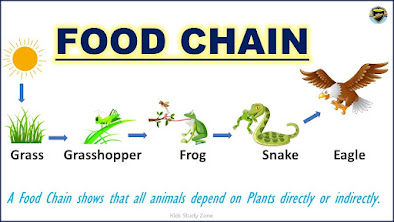
The movement of energy through an ecosystem can be represented through food chains and food webs.


2-What is a food chain?


A food chain shows ‘who is eating who’, and it is made up of 


several levels.


1- Producers: made their own food through photosyntesis. 


Examples: Plants and algae.


2- Consumers: obtain their food by eating other living things. 


Can be:


A) Primary consumers: eat just producers (plants and algae), 


that means that they are herbivores.


Examples: rabbits, sheep, butterflies, snails…


B) Secondary consumers: can eat producers (plants and algae) and other herbivorous animals,  and so they are  omnivores , or they can feed just on herbivores and them they are  carnivores.


Examples: foxes, cats, spiders, owls…


C) Tertiary consumers: eat just other animals, that means 


that they are carnivores.


Examples: snakes, hawks, tigers, sharks…


3- Decomposers: live on the remains of other living things. Most of them are fungi and bacteria.


3-What is a food web?

Most living things in an ecosystem are part of several food chains that are connected and make up a food web.


4-Food chains and food webs Organisms need energy to grow and reproduce. Some organisms, such  as plants, make their own food, but most feed...